The 2026 Tsinghua PBCSF Global Finance Forum Thematic Session | 2026 China Economic Outlook and Release of the China Financial Policy Report
From May 18-19, 2026, the 2026 Tsinghua PBCSF Global Finance Forum was successfully held in Chengdu, Sichuan Province. On the morning of May 19, the thematic session 2026 China Economic Outlook and Release of the 2026 China Financial Policy Report was convened. Centered on the release of the China Financial Policy Report 2026, the session focused on delivering the "Five Major Areas�" in finance and building China into a leading financial power. It brought together leading scholars, industry experts, and senior officials in the financial sector to discuss pathways for advancing high-quality financial development during the 15th Five-Year Plan period.
The session was moderated by He Haifeng, Executive Leader of the Program for China Financial Policy Report at Tsinghua University PBC School of Finance� (Tsinghua PBCSF) and former Chief Economist of Guotai Junan Securities. Ding Zhijie, Director of the Research Institute of the People's Bank of China, released the China Financial Policy Report 2026. Qi Bin, member of the 14th CPPCC National Committee and Deputy Director of the Economic Affairs Committee of the CPPCC National Committee; Huang Haizhou, member of the Monetary Policy Committee of the People's Bank of China and Special-Term Professor at Tsinghua PBCSF; Zhao Yulong, Secretary of the Party Committee and President of the Insurance Association of China; Xu Ming, Professor and Doctoral Supervisor at the School of International Financial Law, East China University of Political Science and Law; and Paweł Kowalewski, Senior Advisor at Narodowy Bank Polski and Advisory Council Member of the Official Monetary and Financial Institutions Forum (OMFIF), delivered remarks and joined the roundtable discussion.
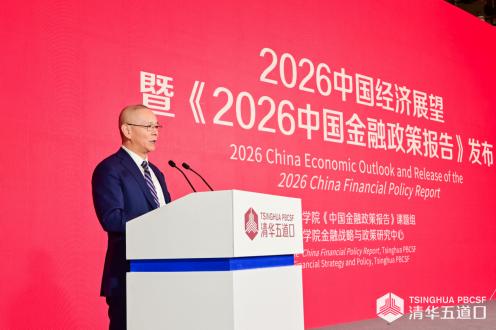
Photo: He Haifeng moderates the session�
He Haifeng introduced the China Financial Policy Report project. Since its launch in 2010, the project has upheld the principle of rooted in China and connected with the world, with the mission of organizing policy information, evaluating policy merits and shortcomings, promoting regulatory improvement, and advancing the rule of law. It has published the bilingual (Chinese and English) China Financial Policy Report for 16 consecutive years. The project team consists of advisors, senior experts, researchers, and interns. From 2019 to 2025, the project team partnered with Xinhua Finance to launch an annual selection of the Top 10 Financial Policies, covering the global, national, and regional/local lists, featuring influential policies related to economic and financial development, deepened financial reform, and distinctive local practices.
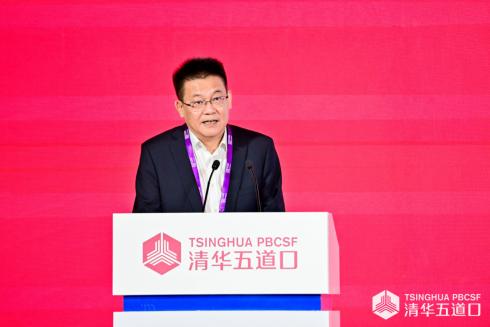
Photo: Ding Zhijie releases the Report�
Ding Zhijie released the China Financial Policy Report 2026 (the "Report"). He noted that building China into a leading financial power requires unswerving commitment to the path of financial development with Chinese characteristics. The development of the financial sector should combine functionality and profitability, serve key sectors, major national strategies, and underserved areas, and support the country's broader development priorities. Delivering the five major areas in finance is precisely a top-level design and strategic plan formulated by the CPC Central Committee and the State Council on this basis. Under the theme "Delivering the Five Major Areas in Finance and Accelerating the Development of a Leading Financial Power," the Report elaborates on three dimensions: the intrinsic connection between the five major areas in finance and the building of a leading financial power; practical progress in related areas; and how to further advance the five major areas during the 15th Five-Year Plan period.
First, Delivering the "Five Major Areas"� in finance is a strategic requirement for accelerating the development of a leading financial power. To provide high-quality financial services, the financial system should make solid progress in sci-tech finance, green finance, inclusive finance, pension finance, and digital finance. Sci-tech finance should rise to challenges and focus on priorities; green finance should build on momentum while establishing new systems before phasing out old ones; inclusive finance should extend a helping hand to those in need and serve people's livelihoods; pension finance should improve systems and enhance well-being; and digital finance should seize opportunities while emphasizing security. In March 2025, the General Office of the State Council issued the Guiding Opinions on Delivering the "Five Major Areas" in Finance. In October 2025, the recommendations for the 15th Five-Year Plan emphasized vigorous development of the five major areas in finance in the section on accelerating the development of a leading financial power. Financial regulators have also systematically advanced relevant work around key areas such as sci-tech innovation, advanced manufacturing, green development, and micro, small and medium-sized enterprises, establishing a "1+5" institutional framework. Looking ahead to the next five years, the five major areas will play an even more prominent role in developing the financial system and building a leading financial power.
Second, Focusing on the building of a strong country and economic and social development, the Report reviews practical progress in the five major areas in finance. In sci-tech finance, as China's economic growth model shifts from factor-driven to innovation-driven development, banks, as the dominant part of the financial system, have leveraged their funding advantages, innovated credit models, applied financial technology, and increased medium- and long-term funding support for technology enterprises and strategic emerging industries. The development of sci-tech finance also depends on key support from the capital market, which provides full-lifecycle financial services for sci-tech innovation. In green finance, China has used technology as a driving force and finance as an enabling force to jointly promote green development and the goals of carbon peaking and carbon neutrality, following a leading path different from that of other countries. In inclusive finance, since the Third Plenary Session of the 18th CPC Central Committee proposed "developing inclusive finance" in 2013, policy guidance has continued to highlight its people-centered nature, while the quality and efficiency of inclusive financial services have steadily improved. In pension finance, policies such as the Guiding Opinions on Providing Financial Support for Chinese-Style Elderly Care and Serving the High-Quality Development of the Silver Economy have been issued in close succession to respond to population aging and the financing needs of the elderly-care industry. In digital finance, the digital transformation of financial institutions has accelerated, while finance has continued to empower the rapid development of the digital economy.
Third, the five major areas in finance should be advanced in a systematic and integrated manner to accelerate the development of a leading financial power. During the 15th Five-Year Plan period, efforts should focus on three priorities: further improving top-level design; strengthening positive incentives for financial institutions; and comprehensively enhancing the professional capabilities of financial services. Looking ahead to the 15th Five-Year Plan period, financial work should be grounded in the overall agenda of Chinese modernization and centered on the primary task of high-quality development. It should systematically reshape the functional positioning of finance and the way financial resources are allocated, strengthen coordination between financial policy and policies on technology, industry, fiscal affairs, taxation, and regional development, and build an institutional framework that advances policy coordination, structural optimization, and functional improvement in an integrated manner. This will help basically establish a financial support system compatible with Chinese modernization and provide solid financial backing for achieving high-level self-reliance and strength in science and technology, green transformation and upgrading, and common prosperity.
After the release of the Report, the guests delivered keynote remarks in sequence and joined a roundtable discussion.
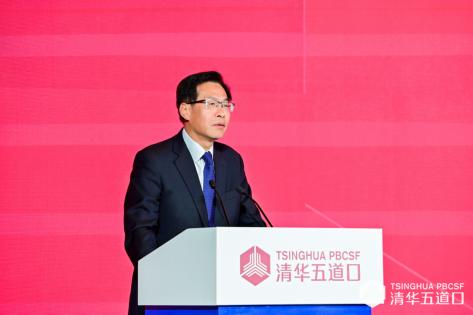
Photo: Qi Bin�
Qi Bin focused on the building of a leading financial power, with particular emphasis on sci-tech finance and pension finance. He first reviewed the main achievements of financial services for the real economy during the 14th Five-Year Plan period: new loans reached 170 trillion yuan, the share of direct financing rose to more than 31 percent, the registration-based IPO system was implemented, and strategic emerging industries accounted for 45 percent of the CSI 300. In 2025, Hong Kong recorded 119 initial public offerings (IPOs), raising 37.4 billion U.S. dollars and ranking first globally. More than half of these IPOs were by technology companies, and information technology firms accounted for more than a quarter. This disproved the claim that Hong Kong is a "relic" international financial center and fully demonstrated the inherent logic that finance must serve the real economy. On sci-tech finance, Qi said that in the current global competition of the artificial intelligence (AI) era, China and the United States are both in the first tier of AI development, with different strengths and weaknesses in algorithms, computing power, and talent. However, the gap in China's capital market support for sci-tech innovation must not be overlooked. Qi argued that China should deepen capital market reform and smooth listing channels for A-shares and Hong Kong stocks, thereby giving long-term investors opportunities to participate in and share the development of China's AI industry; build an AI investment and financing support system in which government funds, state-owned capital, and private capital divide responsibilities and collaborate; follow the laws of sci-tech innovation and improve incentive mechanisms for researchers; draw on China's manufacturing strengths and its vast domestic market to build a collaborative sci-tech innovation ecosystem; and maintain an open stance while actively participating in global AI governance. On pension finance, Qi noted that China is moving from an aging society to a deeply aging society faster than many other countries, while the current stock of second- and third-pillar pension assets remains highly insufficient. Continued investment-side reform, a capital market environment conducive to pension investment, and the orderly entry of long-term capital into the capital market will help create a virtuous interaction among the capital market, pension finance, and sci-tech innovation, supporting their long-term development. Looking ahead to financial development during the 15th Five-Year Plan period, Qi referred to the 2025 Central Economic Work Conference, which called for "continuously deepening the integrated reform of investment and financing in the capital market." He said that reform should continue on the supply side by further marketizing the capital market issuance system, while on the investment side, long-term capital should be guided steadily into the capital market to jointly advance sci-tech finance and pension finance.
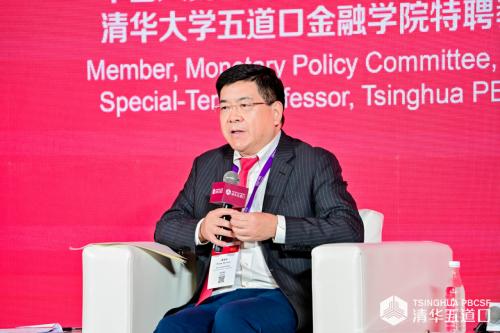
Photo: Huang Haizhou�
Huang Haizhou delivered remarks on "How to Build a Strong Currency," setting out three core views. First, the global monetary system is undergoing major adjustment. Since the Bretton Woods system, the U.S. dollar-centered pattern has been deeply affected by factors such as the weaponization of the dollar and shocks from technology and finance, while RMB internationalization has continued to accelerate alongside China's economic growth and expanding foreign trade. Second, a strong currency, strong capital markets, strong international financial centers, and strong international trade reinforce one another. Leveraging Hong Kong as a distinctive advantage, China should simultaneously develop high-quality investment products to provide international investors with high-quality RMB-denominated assets. Third, amid this era of sweeping global transformation, China should promote reforms of the International Monetary Fund and Special Drawing Rights (SDRs), contributing Chinese solutions to the sound evolution of the international monetary system.
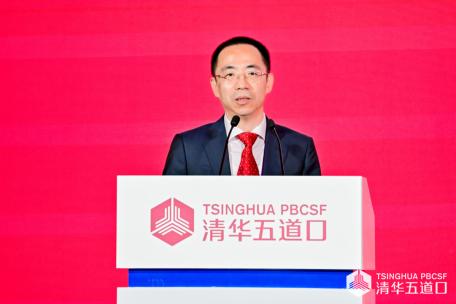
Photo: Zhao Yulong�
Zhao Yulong focused on sci-tech insurance. He noted that sci-tech innovation activities are characterized by high uncertainty, complex risks, repeated iterations, sunk R&D costs, and long cycles. Their basic demand for financial services is therefore "loss compensation" rather than "return sharing." Financial support for technology should thus attach importance not only to venture capital and credit loans, but also to risk protection. Sci-tech insurance can hedge uncertainty in innovation activities at a defined cost and prevent such activities from being terminated because of failure. Zhao reviewed the achievements and features of China's sci-tech insurance across four stages of development. Looking ahead, he proposed three priorities: first, stepping up communication so that research entities and policy departments better understand the functions of sci-tech insurance; second, coordinating resources from multiple parties to build a sci-tech insurance data ecosystem; and third, continuously improving the policy support system for sci-tech insurance, implementing premium subsidies, fiscal and tax support, and other measures, and improving channels and operating mechanisms for patient capital, including insurance funds, to participate more deeply in sci-tech innovation.
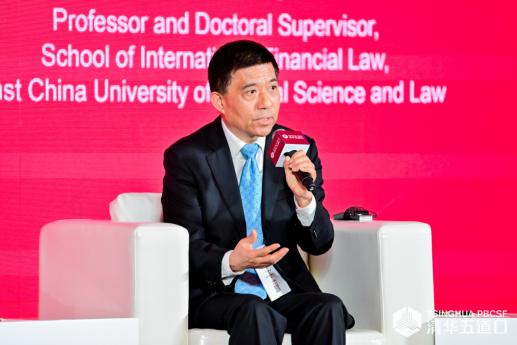
Photo: Xu Ming�
Xu Ming analyzed the topic "Integrated Reform of Capital Market Investment and Financing and Improving the Quality of Information Disclosure." He noted that the current share of direct financing in China's capital market remains clearly too low: by the end of 2025, stock financing accounted for only 1.34 percent of the increase in aggregate financing to the real economy, and the securitization ratio was below 88 percent, a significant gap compared with the U.S. level of 230 percent. He emphasized that the key to integrated reform of investment and financing lies in advancing both sides simultaneously: on the financing side, the market should establish the concepts of honest financing, rational financing, and return-oriented financing; on the investment side, it should accelerate the development of institutional investors and bring in long-term capital. Improving the quality of information disclosure is the core lever of reform. Xu argued that the effectiveness, comprehensiveness, and truthfulness of information directly shape investors' expectations and judgments, and constitute the fundamental guarantee for the existence, expansion, and strengthening of the capital market.
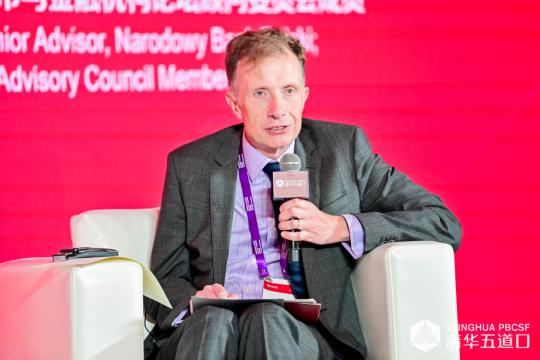
Photo: Paweł Kowalewski
Speaking as an external observer, Paweł Kowalewski candidly and modestly shared lessons from Western central banks in quantitative easing, regulatory shortcomings, and inflation misjudgment, reminding central banks around the world to guard against complacency and buck-passing. On the development of digital currencies, he noted that Europe currently has two divergent views. One, represented by Sweden, embraces digital currency and supports its use as a substitute for paper money. The other, represented by Poland, believes that digital currency is unlikely to add much new value to today's sophisticated and complex payment systems.
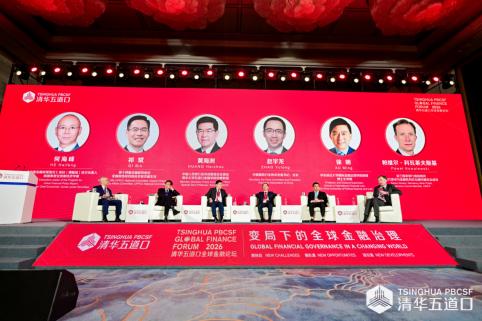
Photo: Roundtable discussion�
After the keynote remarks, guests engaged in in-depth discussions on topics including central banks' gold purchases, information disclosure reform, and the development of sci-tech insurance. Paweł Kowalewski interpreted the rationale behind the Polish central bank's large-scale gold purchases from the perspectives of geopolitical risks and historical memory, and argued that central banks should maintain moderation in foreign exchange reserve management. On information disclosure reform, Xu Ming further proposed four concrete measures: incorporating concepts for both the investment and financing sides into revisions to the Securities Law of the People's Republic of China; deepening and strengthening the registration-based IPO system centered on information disclosure; advancing reforms to make information disclosure more differentiated, concise, and accessible; and applying full-chain regulation and strict accountability to the "key few," including controlling shareholders and actual controllers. Zhao Yulong noted that the development of sci-tech insurance requires stronger coordination among products, policies, and data, with each playing its proper role: demand-adapted insurance products are the core, supportive policies that can address market failures are the driving force, and sound data governance and a sharing ecosystem are the foundation. Huang Haizhou looked ahead to a future in which the RMB could, within a relatively short period, become one of the three major global reserve currencies. He emphasized that a strong currency, strong capital markets, and more open international trade reinforce one another and are the fundamental drivers of RMB internationalization. Looking toward capital market development during the 15th Five-Year Plan period, Qi Bin drew on the historical patterns illustrated in The Great Game, noting that capital markets played an irreplaceable role in the United States' rise over 200 years and that China today faces a similar strategic choice amid the AI wave. He identified accelerating the integrated reform of investment and financing in the capital market and building a Chinese-style "401(k)" system as key levers, with the aim of seizing the historic opportunity presented by the current round of technological revolution.