Theme Forum: New Challenges in Financial Regulation: Green, Digital, and Artificial Intelligence
Abstract: 2026 Tsinghua PBC Global Finance Forum
From May 17 to 20, 2026, the 2026 Tsinghua PBC Global Finance Forum was held in Chengdu. On the morning of May 19, the thematic forum “New Challenges in Financial Regulation: Green, Digital, and Artificial Intelligence” brought together several heavyweight experts to discuss new challenges and opportunities in the context of green finance, digital finance, and AI development, engaging in in-depth discussions on balancing financial innovation and risk prevention.

Image of the event scene
The forum was moderated by Li Yao, a member of the Standing Committee of the 14th National Committee of the Chinese People’s Political Consultative Conference (CPPCC) and a member of the Committee on Economic Affairs of the CPPCC National Committee. Panelists included Andrew Sheng, former Chairman of the Hong Kong Securities and Futures Commission; Wang Xian, Deputy Dean of the National Institute of Financial Research (NIFR) at Tsinghua University; Lv Zhongtao, former Chief Technology Officer of the Industrial and Commercial Bank of China (ICBC); and Enoch Feng, Chief Executive Officer of the Hong Kong Academy of Finance (AoF) and Executive Director of the Hong Kong Monetary Authority (HKMA) Hong Kong Institute for Monetary and Financial Research. They shared insights and engaged in discussions.
Li Yao
Member, Standing Committee of the 14th National Committee, the Chinese People’s Political Consultative Conference (CPPCC); Member, Committee on Economic Affairs, the CPPCC National Committee

Li Yao noted that green transformation, digital transformation, and AI applications are intertwining, reshaping growth drivers and the financial landscape, while profoundly altering risk structures, regulatory logic, and approaches. Balancing innovation-driven development with risk prevention, and building a safe, efficient, inclusive, and green modern financial governance system, is a critical question that must be addressed. Li Yao invited panelists to share perspectives on new challenges and opportunities brought by technological innovation and AI applications in finance, impacts on commercial banks and traditional regulation, pathways to high-quality green finance development, balancing innovation and risk regulation, and Hong Kong’s risk regulatory practices.
Andrew Sheng
Former Chairman, Hong Kong Securities and Futures Commission

Andrew Sheng stated that China’s inclusive green development aligns with the UN Sustainable Development Goals (SDGs). Through green, inclusive growth and large-scale infrastructure investment, China has gained important experience in boosting income growth, expanding employment, and improving development conditions. Its rich practices in new energy development and green project construction provide reference cases for global green transformation. However, challenges remain in achieving SDGs globally, including insufficient political consensus and weaknesses in project design, execution capacity, and governance mechanisms.
Technology is disrupting the tools and structure of the global economy and finance. Regulatory thinking must shift from top-down, linear management to a focus on resilience, synergy, and ecosystem governance. Financial institutions must not only pursue self-interest and local efficiency but also bear responsibility for maintaining overall financial system stability and public interest. Technology changes the speed, scale, and scope of financial operations—enhancing efficiency but potentially amplifying crisis transmission and risk spillovers. The key is to establish governance and regulatory frameworks suited to this double-edged sword.
AI, machine learning, and deep learning are transforming how regulators assess, monitor, and manage institutional and systemic risks. RegTech can help regulators observe market information more comprehensively, identify risk linkages, and maintain system resilience and efficiency. Regulatory thinking must shift from segmented, local, and static management to integrated, networked, and dynamic governance. In the era of rapid digital asset growth, a governance model with clear goals, strong execution, and multi-stakeholder collaboration (market, government, society) is needed, gradually building a financial reform path adapted to complex ecosystems through prudent pilots, impact assessment, and scaling up.
Wang Xian
Deputy Dean, National Institute of Financial Research (NIFR), Tsinghua University;

Wang Xian pointed out that green industries have strong positive externalities, long-term investment horizons, and high risks, leading to significant market failures. Early intervention requires external forces, such as multilateral international organizations, to correct market failures. The establishment of the Equator Principles in 2003 effectively transformed governmental power into a market-based transmission mechanism, making “green” a binding constraint for micro-level decisions. A key global challenge is shifting from government-driven and internationally mobilized efforts to spontaneous market-based green behavior, and leveraging financial leverage to mobilize market forces for green development. This relates to handling the government-market relationship: governments play a key role in setting standards and incentives, while markets must integrate governmental standards and requirements into micro-level behavior and decisions to achieve sustainable green finance development. In China, green development is led by the government followed by the market, leveraging institutional advantages to unify standards and relying on the state-owned economy to create transmission mechanisms combining national strategy with market forces. China has evolved from rule-taker to standard-setter and policy leader.
Lv Zhongtao
Former Chief Technology Officer, Industrial and Commercial Bank of China (ICBC)
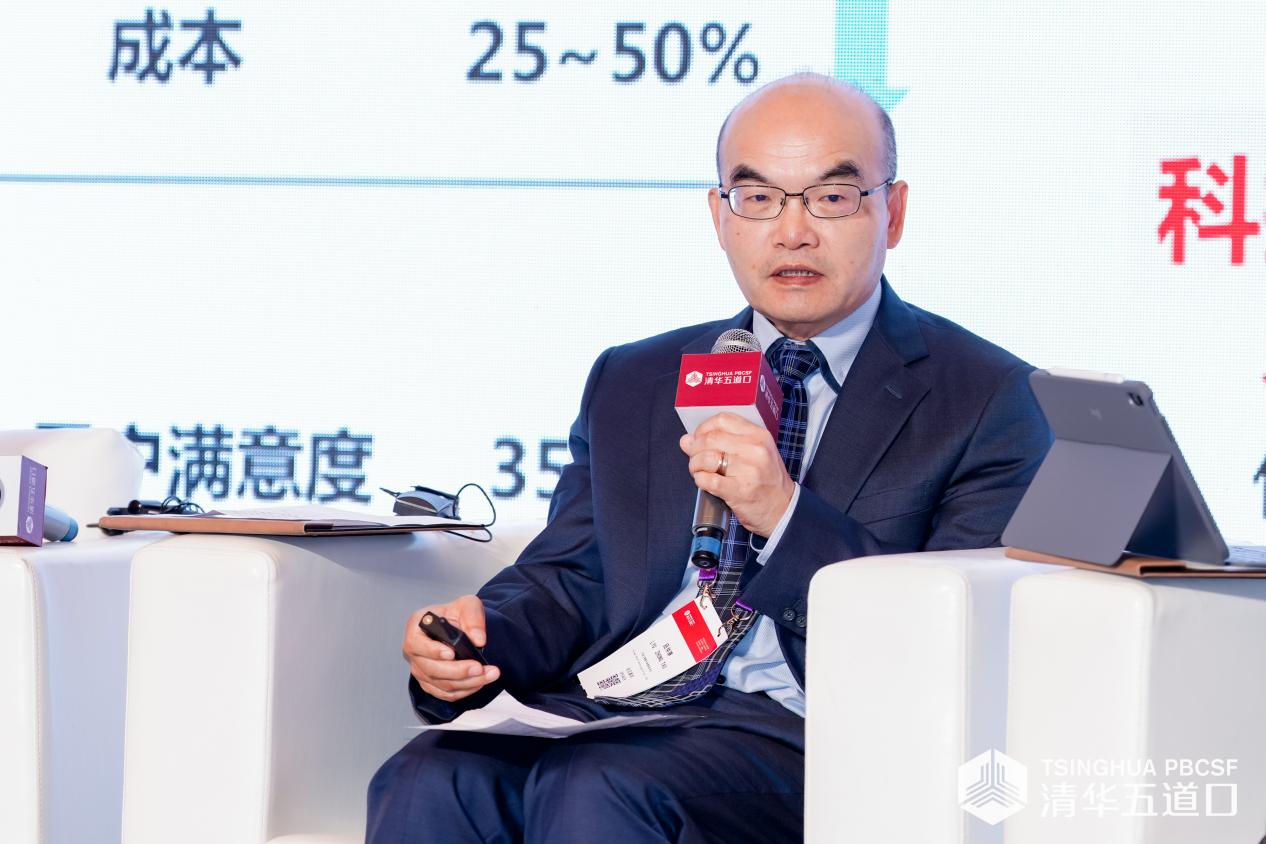
Lv Zhongtao noted that since 2026, cutting-edge AI models have been intensively released, with industry growth booming. The state has elevated “AI+” to a national strategy, targeting 70% penetration of AI agents by 2027. AI is driving profound changes in business models and talent structures in finance and other sectors. Banks are moving from open banking to AI-agent banking, reshaping organizations internally and expanding inclusive services externally. The key is to transform enterprise-specific knowledge into reusable assets, establish a human-machine complementary model where “humans control decisions, agents execute precisely,” and use job-specific agents to advance “job + skill” development, forming a closed business loop. On security, inherent hallucination risks of large models give rise to new threats like prompt injection, cognitive misuse, tool poisoning, etc. Enterprises need to build a comprehensive, monitorable, traceable, intervenable, and auditable security line across six areas: agent positioning, knowledge engineering constraints, multi-agent checks and balances, authority governance, offensive/defensive capabilities, and full-process monitoring. On regulation, Lv recommended a classified approach based on “internal/external differentiation, gradual opening, accountable and controllable.” For external services, maintain prudence and strictness, emphasizing assisted guidance rather than decision-making for customers. For internal empowerment, allow innovative pilots within safe, controllable conditions, deploying tool agents in sandbox isolation to ensure traceability and accountability. Looking ahead, AI has evolved from a tool to a process hub and decision intermediary, with multi-agent collaboration emerging. This requires rethinking human-machine relationships and organizational forms to build an efficient, controllable new collaboration system. Financial industry AI application is at a critical juncture of both opportunities and challenges. Only by grasping technological trends, strengthening security, and improving regulation can high-quality development be truly empowered.
Enoch Feng
Chief Executive Officer, Hong Kong Academy of Finance (AoF);
Executive Director, Hong Kong Monetary Authority (HKMA), Hong Kong Institute for Monetary and Financial Research
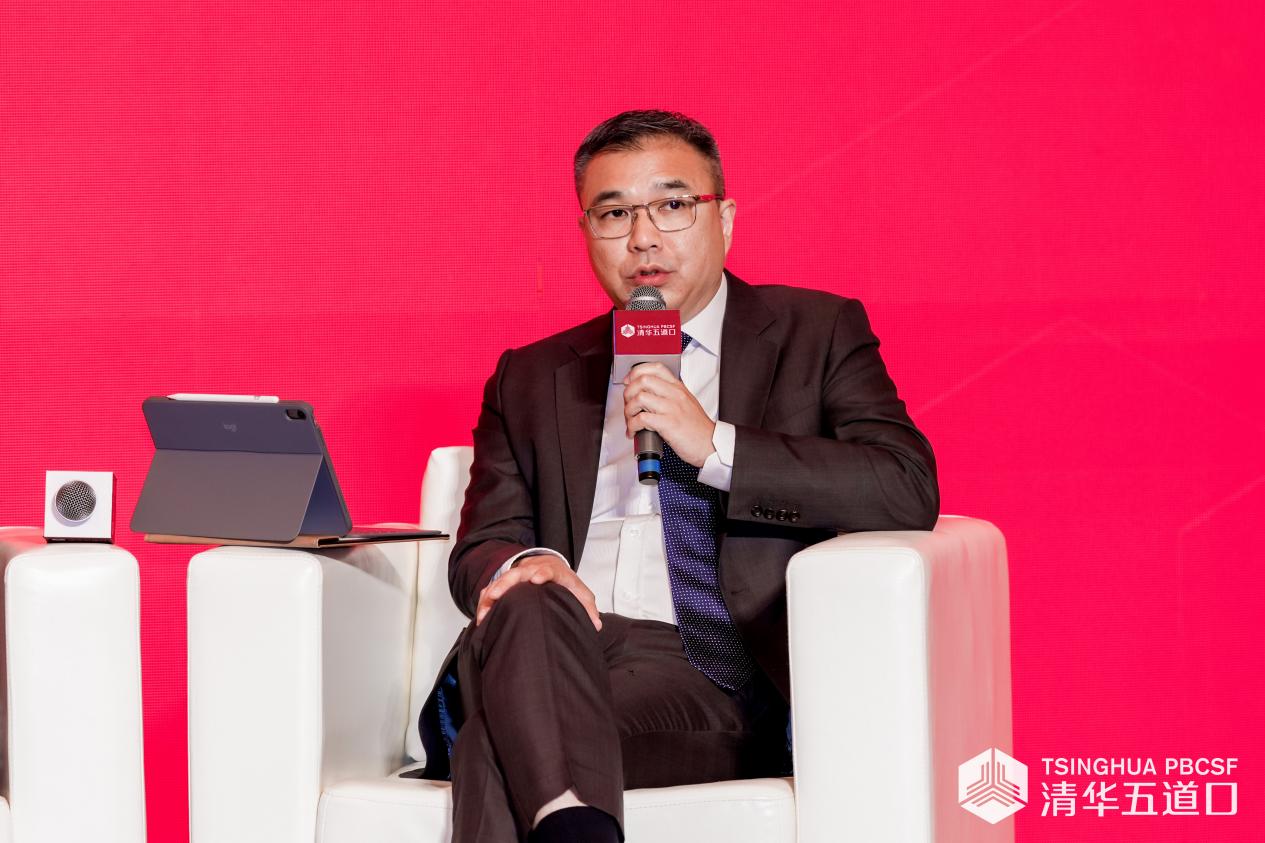
Enoch Feng stated that 2026 marks the start of the 15th Five-Year Plan period, which explicitly positions Hong Kong to leverage its international financial center status and “one country, two systems” advantages to support national financial reform and high-level opening. Amid global changes and complex geopolitical environments, financial institutions face multiple risk shocks affecting business models and operations. Regulatory challenges mainly involve four areas: (1) Maintaining financial stability as the foundation for innovation and development. (2) Time lags between regulation and risk evolution; as an international financial center, Hong Kong must balance regulatory consistency with developmental differences. (3) Financial institutions’ risk management and governance, especially regarding FinTech application, responsible AI use, and climate change impact on asset quality. (4) Data quality, ensuring reliability when relying on third-party data. Specific measures include: policy incentives—Hong Kong’s foreign reserves remain above 1.6 times the monetary base, securing financial stability; regulatory sandboxes—providing controlled environments for FinTech innovation, helping both the industry deepen technical understanding and regulators enhance capabilities; active participation in international organizations—making Hong Kong’s voice heard in policy and standard setting. Serving the real economy, building financial power, robust international financial centers, strong financial institutions, talented finance professionals, and effective financial regulation requires multi-level efforts. Hong Kong, as a national international financial center, can seize opportunities by using its stable and reliable financial platform to “bring in” and “go global.”
Panel Discussion
On technology’s impact on commercial banks and traditional regulation, Andrew Sheng noted that financial institutions’ viability and regulatory risks cannot be assessed in linear, siloed ways. Banks are becoming universal. Mastering data and information is key for internal risk management, external supervision, and analyzing opportunities and problems. Regarding implementing China’s financial ecosystem regulation, Sheng suggested that banks use smart models to analyze system operations and conduct stress tests. Establishing a large model within China’s financial regulatory system could provide a good risk identification and supervision tool for the global financial system.
On China’s institutional advantages and broad application scenarios for green development, and pathways to high-quality green finance, Wang Xian stated that the core of the Equator Principles is converting external constraints from governments or multilateral organizations into internal motivation for financial institutions and enterprises, better leveraging market mechanisms. Ultimately, market forces must drive high-quality green finance development to ensure the healthy, sustainable growth of green finance and green industries. Future efforts need rule improvement, information disclosure, and carbon pricing mechanism construction to strengthen market participants’ motivation for green finance, enabling financial institutions to influence their own decisions and transmit them to corporate green investment and low-carbon transition decisions.
On defining the boundaries of “core decision-making authority,” Lv Zhongtao noted that this requires balance, focusing on classification, accountability and attribution anchoring, and maintaining human capabilities. On preserving “moderate trial and error space for agents” while maintaining risk bottom line, he indicated that regulatory sandboxes are an important mechanism. Control interfaces for AI systems must be retained. Regulatory rule lag is objective, so corporate compliance and risk management responsibilities must be implemented. Sandboxes need improved efficiency, clear boundaries, and regulatory coordination to avoid gray areas and loopholes.
On Hong Kong’s practices in regulating and promoting FinTech, and how its green finance and FinTech measures can better serve national green development and SDGs, Enoch Feng introduced Hong Kong’s regulatory philosophy: maintaining financial stability while steadily advancing innovation and deepening FinTech. He presented the HKMA’s “FinTech 2030” blueprint, focusing on four areas summarized as “DART”: Data, AI, Resilience, and Tokenization. The fundamental regulatory principle is “same activity, same risk, same regulation,” refined through DART. On green finance, opportunities arise from geographic shifts in global green transition finance, alongside short-term climate risks. Key regulatory measures include developing a common classification content and actively participating in green finance disclosure standard setting. He also shared Hong Kong’s green tokenized bond issuances aimed at catalyzing related markets.
At the forum’s conclusion, former PBoC Governor Zhou Xiaochuan and other attendees exchanged views with panelists on AI’s impact on the banking industry.
Responding to audience questions, Lv Zhongtao added that current job-driven approaches stem from banks’ actual operational needs. US startup models, with small tech teams, incubate new scenarios and simulate new processes with room for error. Large existing banks under strong supervision must undergo a gradual AI adoption process. Currently, AI tools are embedded in jobs, but business models have not been reconstructed using AI. Technologically, banks will evolve from current process-driven banks to AI-native bank business models. Traditional bank structures (front, middle, back office) are based on heterogeneous segregation. In the future large-model era, heterogeneity may manifest as real-time model-supervised models or heterogeneous model-supervised models, rather than current job transfers. Regarding individual capabilities and job boundaries, future model training can expand capability boundaries, integrating multi-job competencies to reconstruct business processes.