On May 18, 2026, the 2026 Tsinghua PBCSF Global Finance Forum was held in Chengdu, Sichuan Province. The fourth thematic session, titled "AI-Driven New Development of the Digital Economy," brought together six leading experts and scholars from China and abroad. They shared their views on the progress, improvements, opportunities, and challenges brought by AI-driven digital economic development, offering participants a stimulating exchange of ideas.
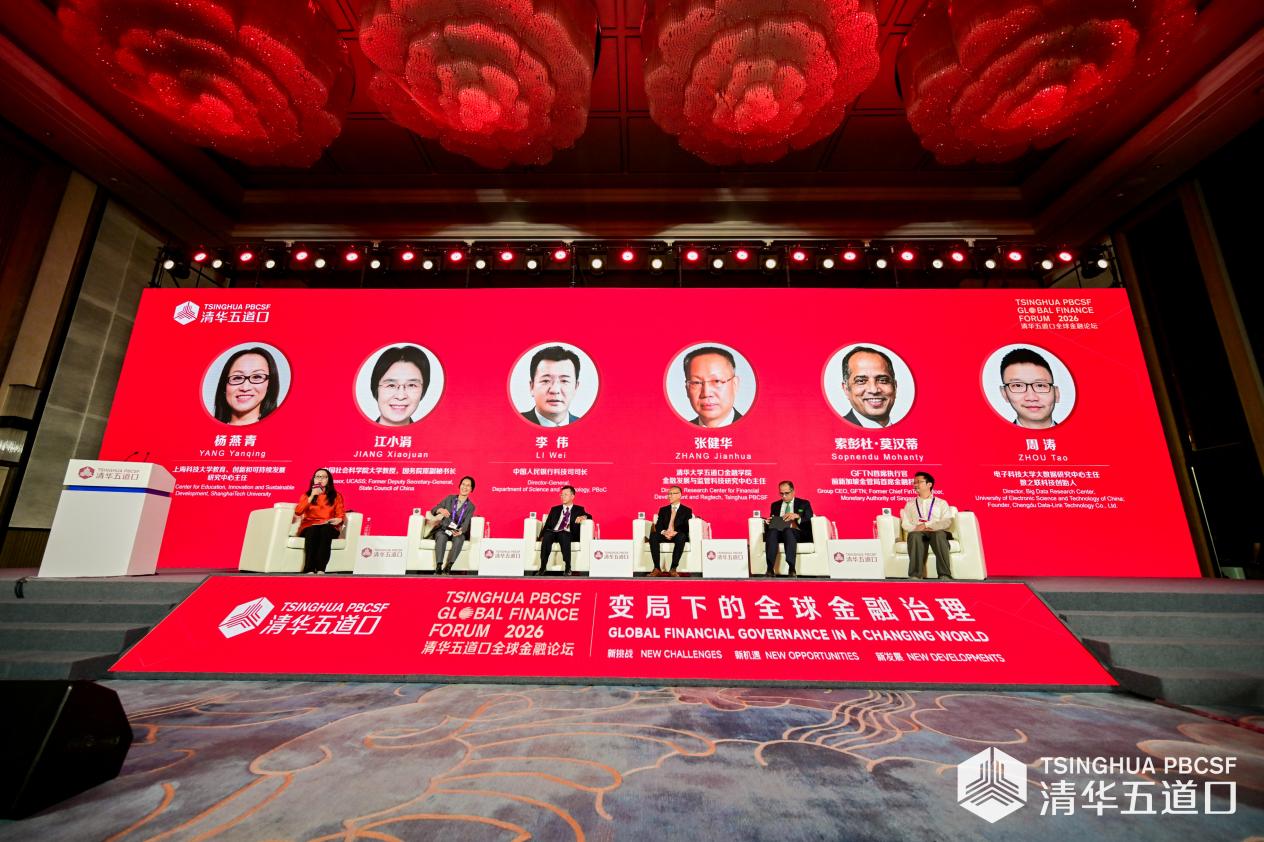
Photo Roundtable Discussion
The session took the form of a roundtable discussion. Jiang Xiaojuan, Professor at the University of Chinese Academy of Social Sciences (UCASS) and former Deputy Secretary-General of the State Council; Li Wei, Director-General of the Technology Department of the People's Bank of China; Zhang Jianhua, Director of the Research Center for Financial Development and Regtech at Tsinghua University PBC School of Finance (Tsinghua PBCSF); Sopnendu Mohanty, CEO of GFTN and former Chief FinTech Officer of the Monetary Authority of Singapore; and Zhou Tao, Director of the Big Data Research Center at the University of Electronic Science and Technology of China and founder of Union Big Data, discussed AI-driven developments in the digital economy. The forum was moderated by Yang Yanqing, Director of the Center for Education, Innovation and Sustainable Development at ShanghaiTech University.
Jiang Xiaojuan, Professor at UCASS and former Deputy Secretary-General of the State Council
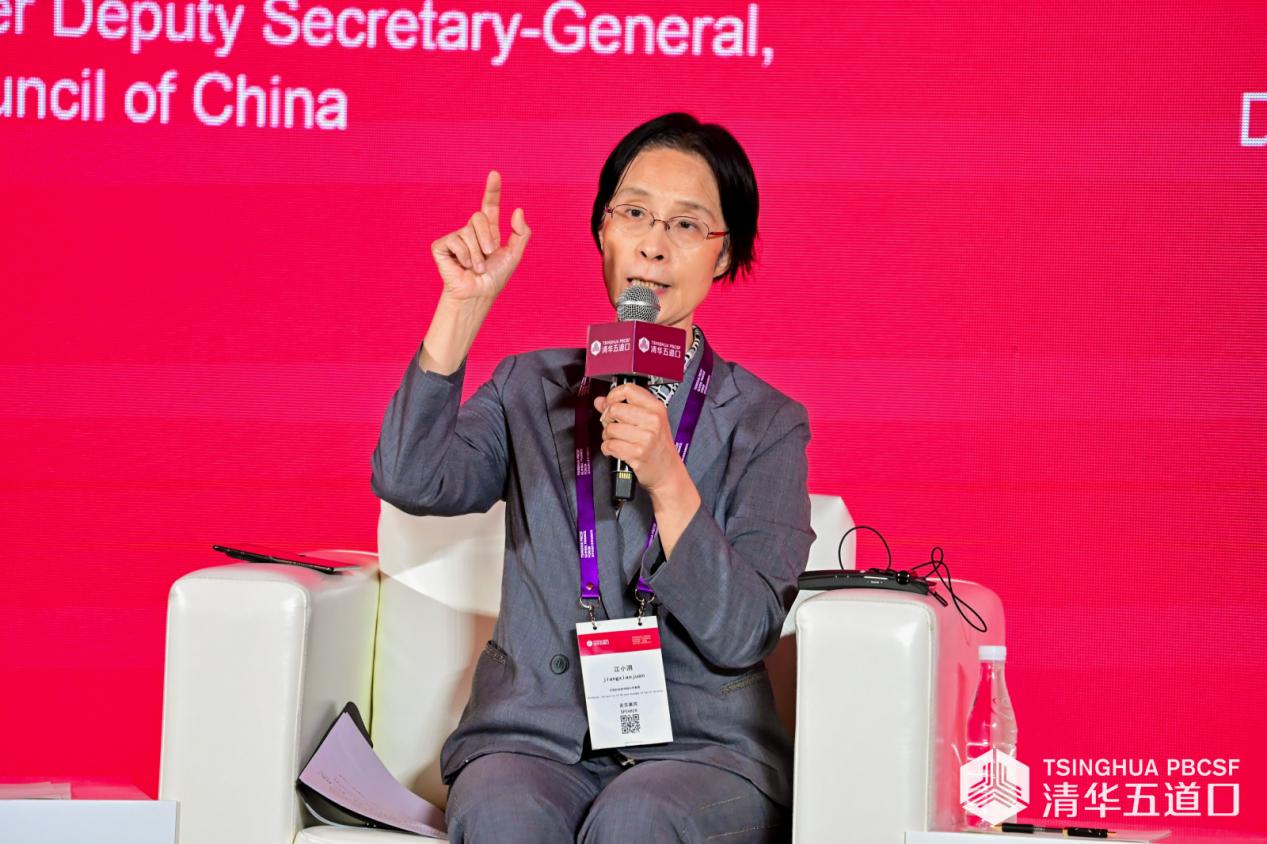
Professor Jiang Xiaojuan noted that traditional economic theory regards the service sector as a low-efficiency industry, so a rising share of services tends to drag down growth, a pattern observed in many advanced economies. China is now at a critical stage in which the share of the service sector is rising rapidly. Fortunately, digital and intelligent technologies have the most pronounced effect on improving service-sector efficiency. A considerable number of service industries will see major productivity gains, effectively offsetting the growth pressure caused by low service-sector efficiency. Therefore, this wave of technological development is not only an industrial transformation; at the macro level, it is becoming an important new driver and a key force supporting China's long-term stable economic growth.
Jiang argued that while preventive and strict regulation should be imposed on issues that seriously endanger the state and society, responsive regulation should be used more often to leave sufficient room for development. Technological iteration is too rapid to predict its direction with certainty. We should trust social consensus and collective wisdom to guide AI toward broadly sound development. This is especially true for large models and agents, the current main carriers of AI technology, whose basic need for survival and growth is to attract more users. If they, against the will of enterprises and citizens, orient themselves toward malicious attacks or other deliberate wrongdoing, no one will be willing to use them. At home and abroad, there have already been multiple cases in which models and agents raised broad public concerns over data use, security measures, and values; before governments even became aware of the issues, public opposition forced rapid corrections. In short, these issues should be considered rationally, with governments, enterprises, and citizens each playing their proper roles and jointly making balanced judgments that take all parties' concerns into account.
Looking ahead to 2030, Jiang Xiaojuan identified "consensus" as the key word, arguing that future AI development should balance the interests of multiple parties and evolve sustainably on the basis of the broadest possible social recognition.
Zhang Jianhua, Director of the Research Center for Financial Development and Regtech at Tsinghua PBCSF
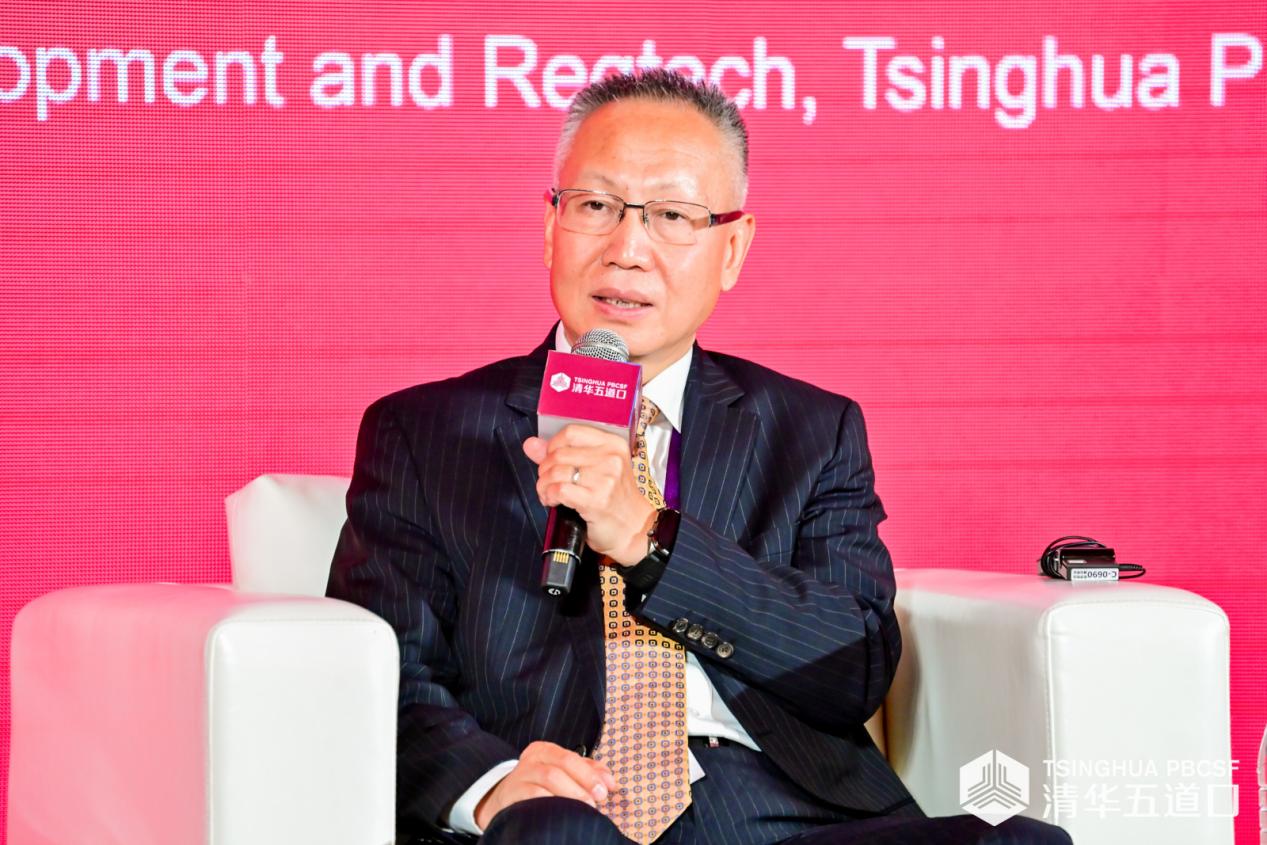
Zhang Jianhua pointed out that AI, as a core industry of the digital economy, is leading global growth while also carrying bubble risks. The financial industry has long used decision-making "small models," but the emergence of generative large models marks a qualitative leap from simple assistance to logical reasoning and collaborative integration. While this enhanced capability empowers business operations, it also brings challenges in model control and security risk. In addition, the enormous gap in AI investment among large, medium-sized, and small financial institutions will widen the "AI divide," leading to imbalances in institutional competitiveness and even market exits. In response, Zhang advocated penetrative supervision as the core approach. AI technologies with insufficient explainability and unclear underlying mechanisms should be prohibited from customer-facing use and limited to internal testing and employee enablement. The financial industry should place greater emphasis on technological maturity and suitability rather than mere advancement; top large models may not be appropriate for all financial institutions.
Looking ahead to 2030, Zhang Jianhua said "divergence" will become the key word for AI development. This will be reflected in the reshaping of competition among financial institutions due to huge differences in investment and technological mastery, as well as in productivity stratification among individuals caused by different levels of AI application capability.
Sopnendu Mohanty, CEO of GFTN and former Chief FinTech Officer of the Monetary Authority of Singapore
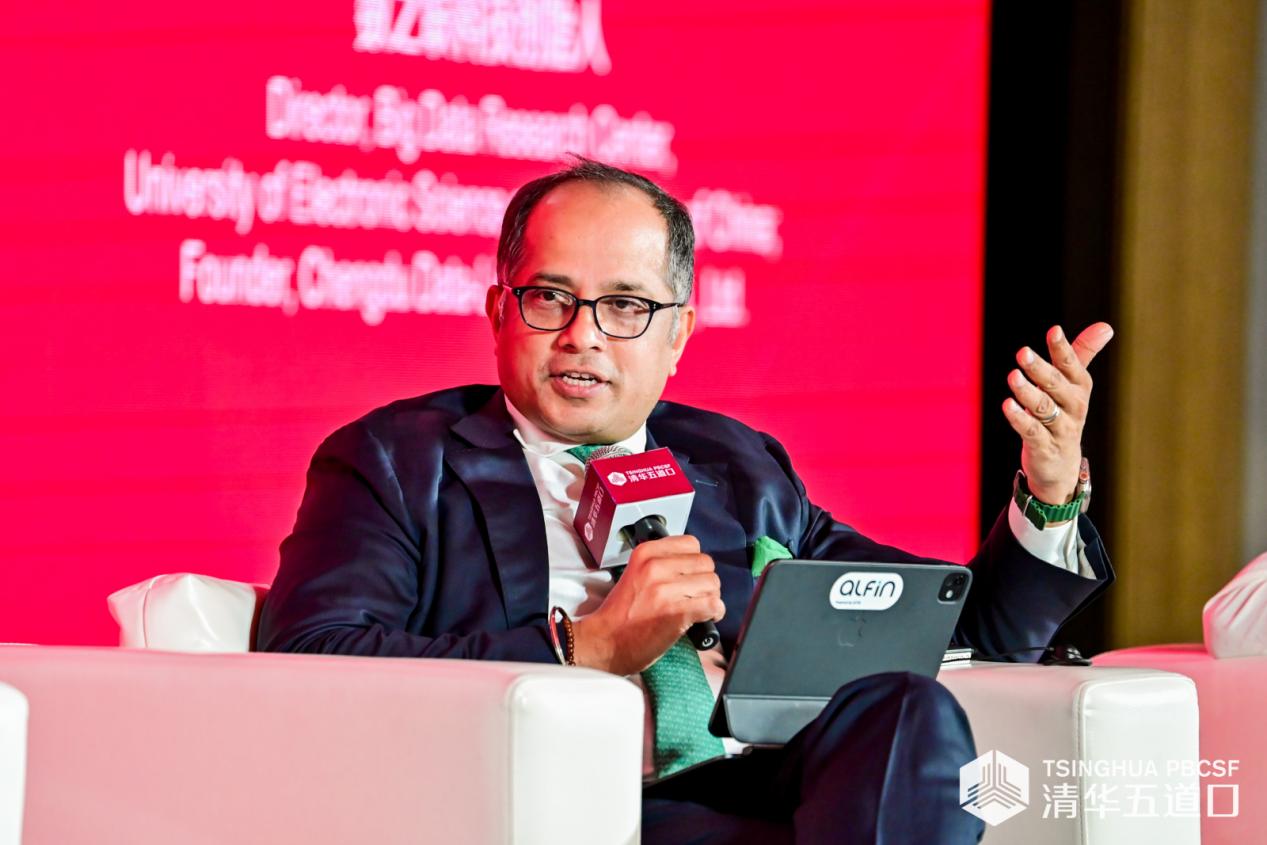
Sopnendu Mohanty, CEO of GFTN, said that AI's fundamental impact on the economy is comparable to the role of electricity in the Industrial Revolution and will reshape growth models, education systems, and labor relations. Current bottlenecks include energy supply, data-center construction, and risks related to AI autonomy. Employment structures will also diverge significantly: top talent will be empowered, while workers at the lower end will face challenges. AI can improve productivity in emerging markets and help address labor shortages in areas such as healthcare, exerting far-reaching influence on economies of all types. Attention should be paid to technological concentration and infrastructure bottlenecks, with prudence maintained amid optimism. Mohanty also affirmed the development of AI in China, noting that the emergence of open-source models has fundamentally changed the landscape of AI development, while China has actively embraced open AI models and promoted the rapid diffusion of technology across sectors.
Regarding the risks and regulation of AI applications in the financial industry, he noted that financial institutions must obtain regulatory approval before deploying AI, and that the core of regulation lies in fairness, ethics, accountability, and transparency. He warned that open-source AI software such as Mythos entails cybersecurity and other risks, and that frontier models may have difficulty operating in emerging markets due to data-related issues. He advocated keeping public and private clouds separate and drawing on China's experience to prevent systemic risks.
Zhou Tao, Director of the Big Data Research Center at the University of Electronic Science and Technology of China and founder of Union Big Data
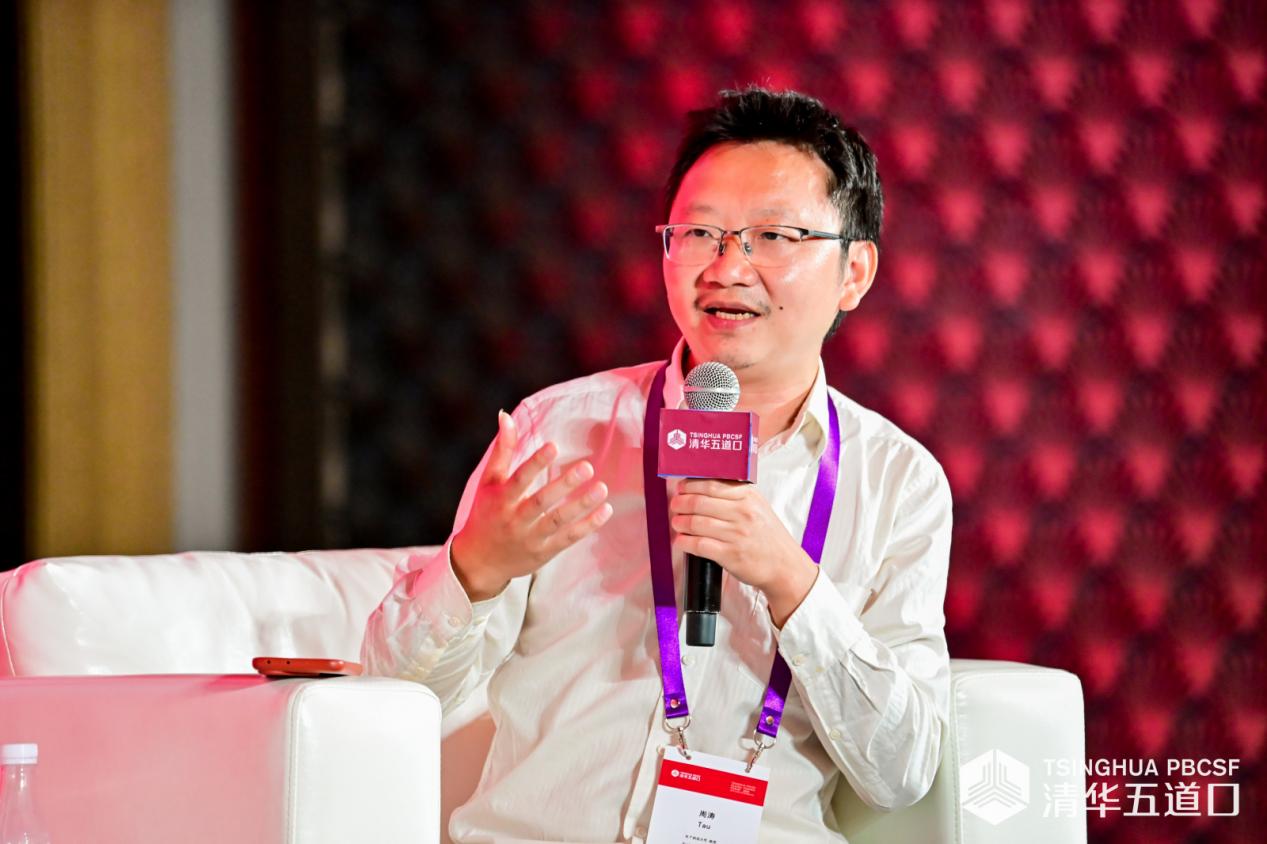
Zhou Tao pointed out that spatial intelligence, the coded world, and deep creation are the three core frontiers in today's AI field. The first is spatial intelligence. AI has already mastered linguistic intelligence through statistics, but it still struggles to grasp spatial intelligence based on physical laws, and its perception of the physical world remains at an early stage. The second is the coded world. Code is highly structured and verifiable, which can eliminate the "hallucinations" of natural language. Industry giants are betting on fully codifying the physical world, emotions, and even modeling, reconstructing reality with logical precision. The third is deep creation. AI will evolve from assisting research to autonomous exploration, a capability that will reshape the research pyramid and may even replace a large share of basic scientific research.
At the same time, Zhou Tao expressed concerns about AI's potential impacts, including intensified human alienation that could change social structures, a diminished sense of human uniqueness that may leave the next generation confused about its own value, and ethical and security risks arising from the misuse of AI capabilities. In response to AI's erosion of human identity and existential meaning, Zhou proposed addressing the issue on two levels: first, trusting in the distinctive resilience of China's system to navigate this challenging period; and second, pursuing higher-level spiritual fulfillment.
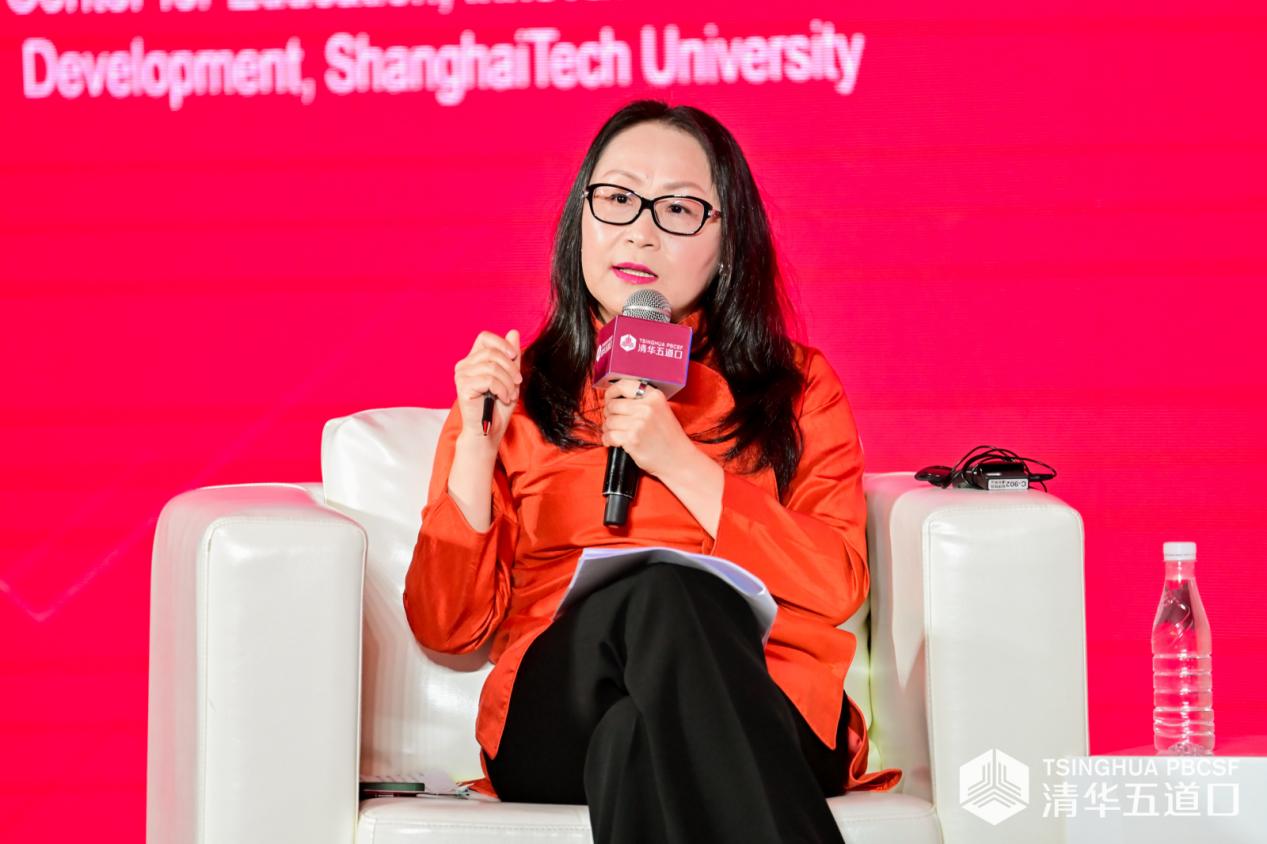
Photo: Yang Yanqing moderating the session.